Domestic Asbestos Floor Tile Removal Project
Complete kitchen and hallway floor tile removal in your area – demonstrating our systematic approach to occupied property work, encapsulation options, and minimal-disruption project delivery.
Providing asbestos services across the UK, excluding Ireland.
Project Background and Initial Assessment
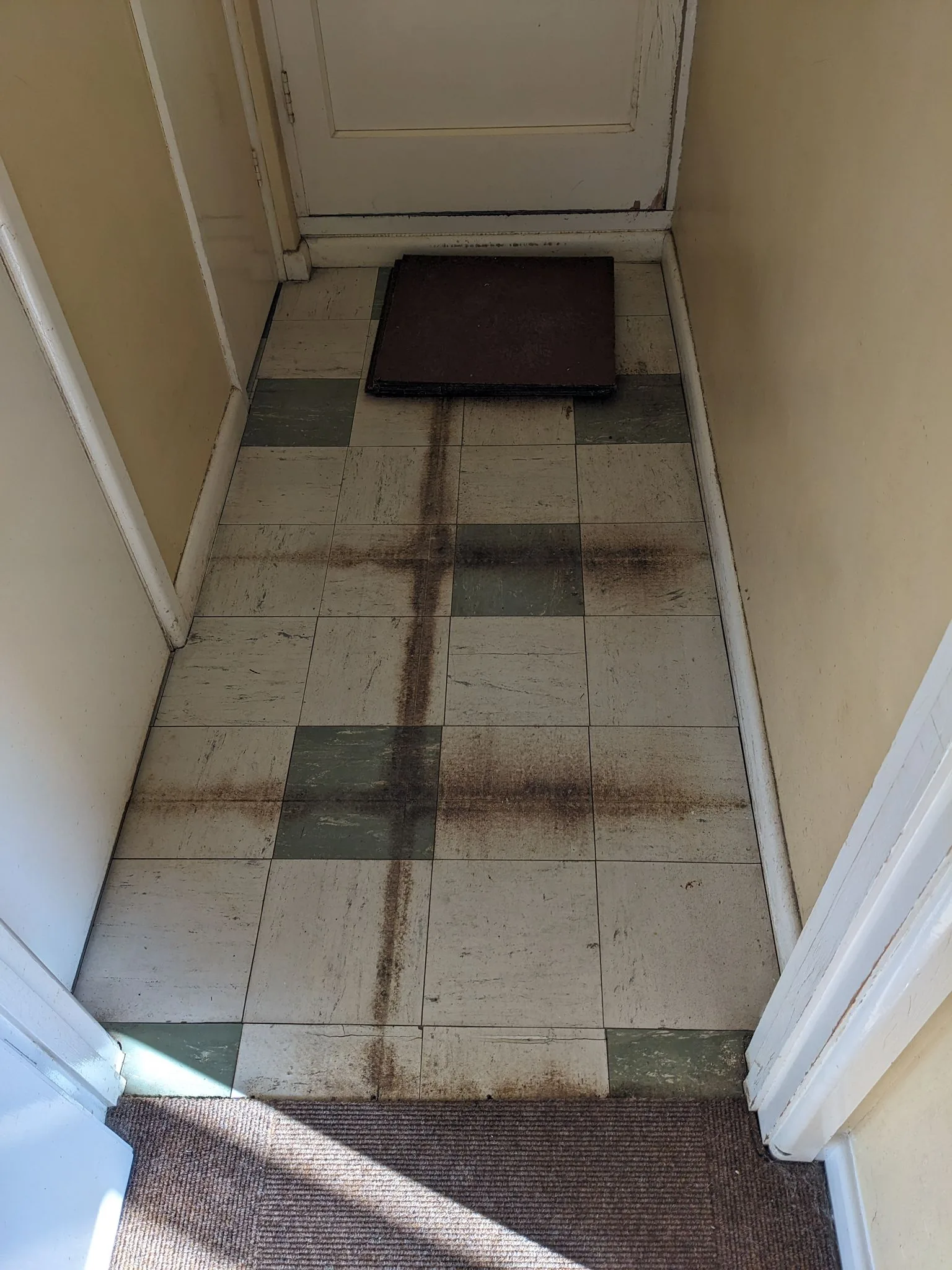
A homeowner contacted us during kitchen renovation planning after discovering suspected asbestos floor tiles beneath existing vinyl flooring. The property, a 1960s semi-detached house, featured original 9"×9" floor tiles in the kitchen and entrance hallway—classic dimensions and appearance strongly suggesting vinyl asbestos tile (VAT) construction typical of that building period.
The client's renovation contractor had advised against proceeding until asbestos status confirmation, recognizing that disturbing asbestos-containing materials without proper controls creates serious liability and health risks. The homeowner required rapid turnaround—kitchen fitters were scheduled to commence installation within three weeks, creating tight timing constraints for testing, quotation, and removal work.
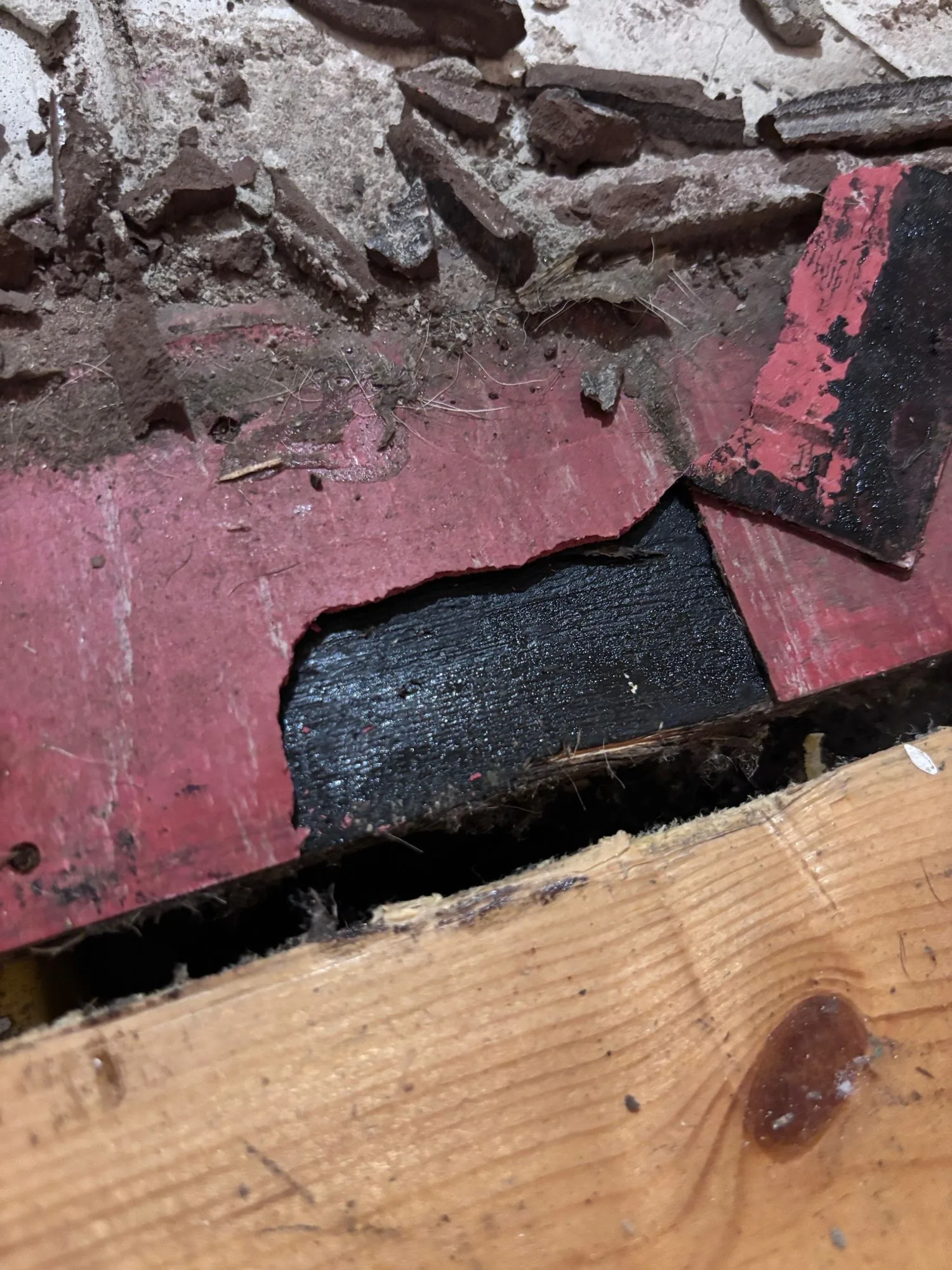
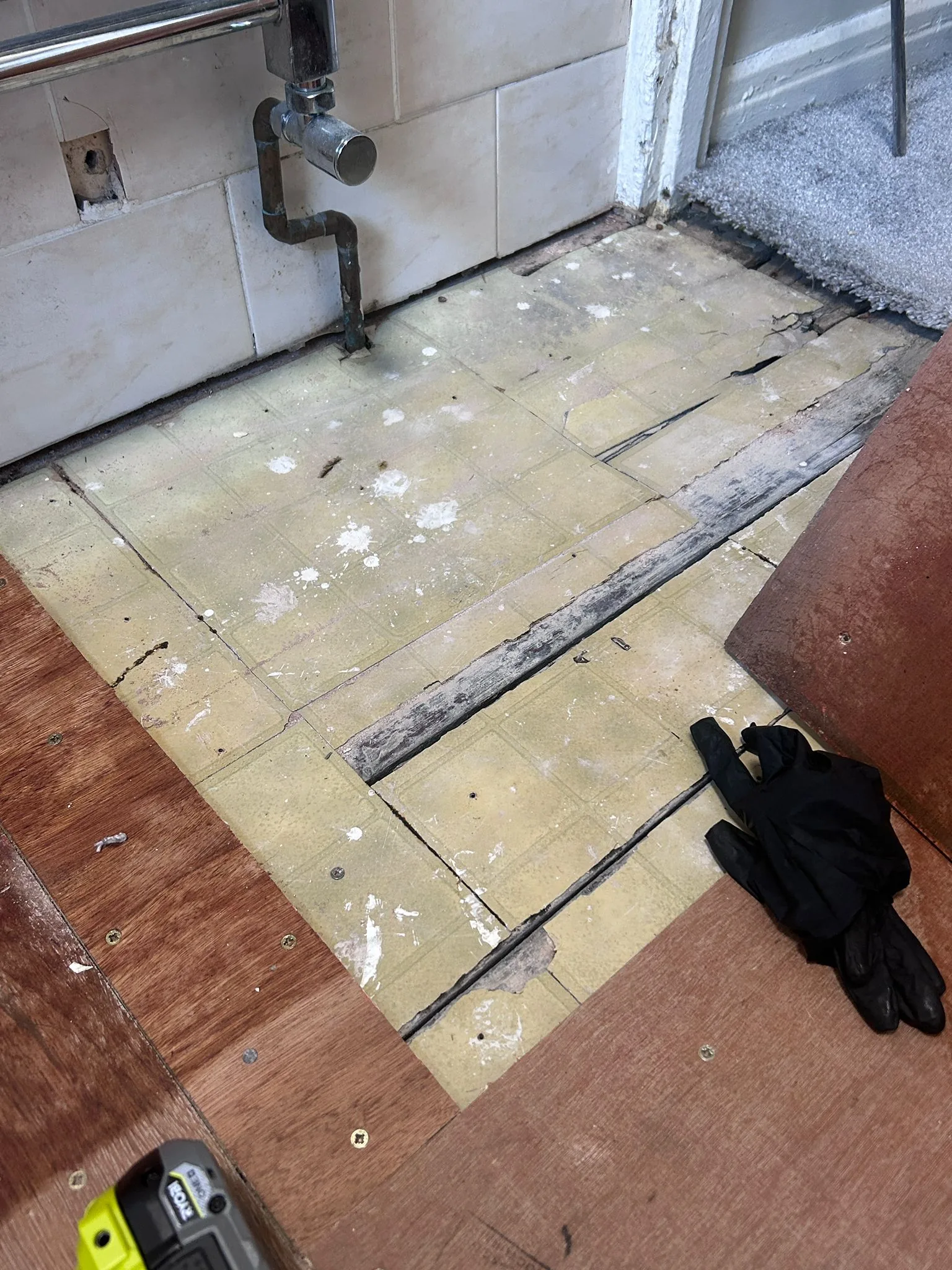
We conducted a free initial site visit to assess the situation. The tiles showed characteristic aging patterns including surface yellowing, checking (fine surface cracks), and edge lifting in high-traffic areas near doorways. The tiles were laid over solid concrete subfloor with clearly visible black bitumen adhesive residue where edge tiles had lifted. Both tile and adhesive required separate testing—both potentially contained asbestos.
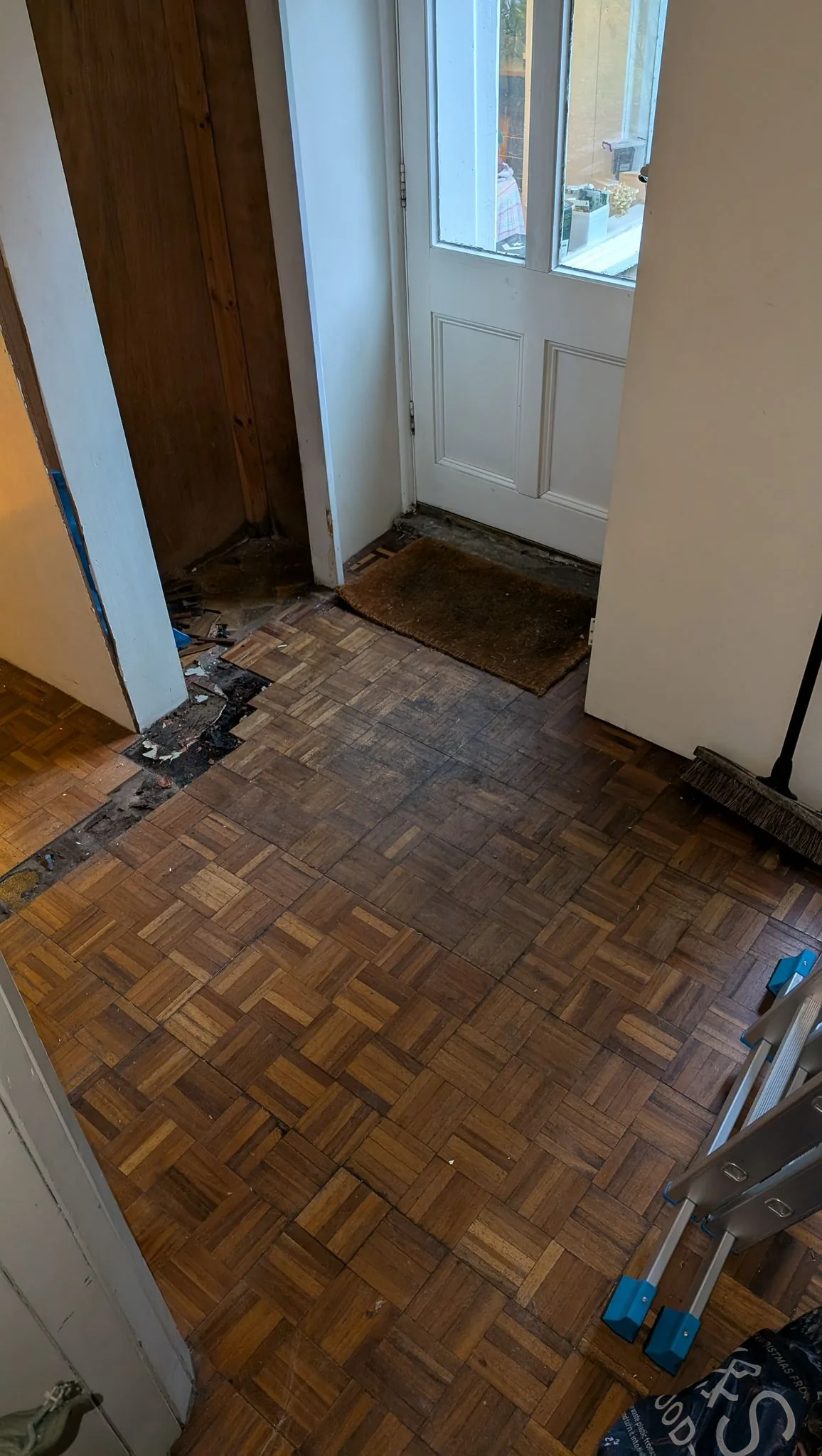
The affected area totaled approximately 18 square metres (combined kitchen and hallway), representing a moderate-scale domestic project. The property remained occupied throughout, requiring careful coordination to minimize disruption to the young family living there.
Testing and Material Confirmation
We collected representative samples from both floor areas during the initial visit. Sampling methodology involved carefully lifting edge tiles (already partially detached through age-related adhesive degradation) and collecting underlying adhesive scrapings. This approach avoided creating additional floor damage while obtaining necessary material specimens for laboratory analysis.
We collected three discrete samples: kitchen floor tiles, hallway floor tiles, and bitumen adhesive from beneath both areas. UKAS-accredited laboratory testing using polarized light microscopy (PLM) confirmed:
- Kitchen floor tiles: Positive for chrysotile asbestos at 12% content by weight
- Hallway floor tiles: Positive for chrysotile asbestos at 15% content by weight
- Bitumen adhesive: Positive for chrysotile/amosite asbestos mixture at 8% total content
Results returned within 5 working days, allowing prompt quotation development and client decision-making. The confirmed asbestos presence meant professional removal was legally required—DIY removal would violate Control of Asbestos Regulations 2012 and create serious exposure risks for the family.
Removal Options and Client Decision
We presented two options aligned with the client's renovation plans and budget:
Option 1: Full tile and adhesive removal – Complete removal of all tiles and underlying bitumen adhesive using mechanical scraping methods, leaving clean concrete subfloor. This approach provided the cleanest substrate for new flooring but carried higher cost (£2,400) and longer duration (3-4 days). The aggressive adhesive removal process would generate substantial dust requiring enhanced containment and continuous HEPA filtration.
Option 2: Tile removal with adhesive encapsulation – Controlled tile removal followed by HEPA vacuuming and application of specialist epoxy encapsulant coating over residual adhesive. The sealed surface would provide suitable substrate for new vinyl flooring installation. This option offered lower cost (£1,450), shorter duration (2 days), and reduced disruption while maintaining full regulatory compliance. The encapsulated adhesive would remain permanently sealed beneath the new flooring.
The client selected Option 2 (encapsulation) based on cost-effectiveness and timing alignment with their kitchen installation schedule. The new vinyl plank flooring planned for installation would perform perfectly over the encapsulated surface, and the family had no plans for future works requiring floor penetration (such as underfloor heating) that might disturb the encapsulant layer.
Removal Execution and Containment
We scheduled work over a weekend to minimize family disruption. Preparation included establishing polyethylene sheeting containment barriers isolating the kitchen and hallway from living areas. We installed temporary door seal systems with zippered access allowing controlled entry/exit without breaching containment integrity.
The removal methodology prioritized keeping tiles intact during lifting to minimize fiber release. We used floor scrapers and pry bars applied carefully beneath individual tiles, working systematically from room perimeters inward. Most tiles lifted successfully as complete units due to age-related adhesive degradation. Broken fragments underwent immediate wetting and collection into double-lined rubble sacks labeled with asbestos warning markings.
Throughout removal operations, we maintained continuous wetting of work surfaces using surfactant solution preventing airborne fiber generation. All operatives wore FFP3 respiratory protection and full disposable coveralls throughout the work. The contained work areas underwent negative air pressure maintenance using HEPA-filtered air extraction units, preventing any fiber migration to occupied spaces.
Following tile removal, we conducted thorough HEPA vacuuming of the entire exposed floor surface, capturing all loose debris and residual dust contamination. The concrete subfloor showed typical bitumen adhesive residue coverage—approximately 60% surface coverage with 2-4mm adhesive thickness in most areas.
Encapsulation Application and Site Clearance
After confirming clean surface conditions (no loose debris or contamination), we applied two-part epoxy encapsulant directly over the residual bitumen adhesive. The coating system permanently binds asbestos fibers within the adhesive matrix, preventing any future fiber release even if the surface experiences minor abrasion or wear.
Application methodology involved roller coating ensuring complete coverage across all exposed adhesive areas. We applied the encapsulant in two coats achieving minimum 200-micron total dry film thickness—sufficient to provide durable, long-term asbestos containment. The coating cured to a hard, impact-resistant surface providing excellent substrate for the client's planned vinyl plank flooring.
All removed tiles and contaminated materials underwent packaging in approved asbestos waste sacks. Total waste volume came to approximately 280kg (tiles are relatively dense material). We transported all waste directly to a licensed asbestos disposal facility, providing the client with full consignment note documentation and disposal certificates confirming legal compliance.
Final site decontamination included removal of all containment barriers, HEPA vacuuming of adjacent areas where tracking might have occurred, and thorough damp wiping of all exposed surfaces. We provided the client with encapsulation certification documentation and guidance notes for future property owners regarding the sealed asbestos presence.
Project Outcomes and Follow-On Installation
The project completed successfully within the planned 2-day timeframe over the weekend, allowing the kitchen installation contractors to commence work on schedule the following Monday. The encapsulated floor surface provided an excellent substrate—the installers reported the surface flatness and condition exceeded typical renovation project standards.
Total project cost of £1,450 included laboratory testing, professional removal, encapsulation, waste disposal, and all certification documentation. The client avoided the additional £950 cost of full adhesive removal while achieving equivalent safety outcomes and regulatory compliance. The encapsulation approach delivered the cost savings directly into their kitchen renovation budget.
The family experienced minimal disruption—the work areas remained inaccessible for just two days, and no asbestos contamination affected occupied living spaces. The negative pressure containment and systematic decontamination procedures ensured complete protection for all household members, including young children.
This case study demonstrates effective domestic asbestos floor tile management balancing safety, compliance, cost control, and programme alignment. The encapsulation approach provided pragmatic risk management appropriate for residential renovation contexts where complete waste minimization and schedule efficiency deliver significant client value alongside regulatory compliance.