
Asbestos Insulation Board (AIB) Removal
Licensed removal of asbestos insulation board from ceilings, walls, and fire protection installations in your area – demonstrating our expertise in high-risk licensed asbestos work requiring HSE notification and specialist controls.
Providing asbestos services across the UK, excluding Ireland.
Understanding Asbestos Insulation Board (AIB)
Asbestos insulation board represents one of the highest-risk asbestos-containing materials commonly found in UK buildings constructed or refurbished between the 1950s and mid-1980s. AIB typically contains 15-45% chrysotile (white) asbestos by weight, with some formulations also incorporating amosite (brown asbestos), creating materials with extremely high fiber release potential when disturbed.
AIB was manufactured in various forms including flat boards, profiled ceiling tiles, and fire protection panels. Common trade names included Asbestolux, Marinite, and LDR (Low Density Rigid) board. The material offered excellent fire protection properties, thermal insulation, and sound dampening characteristics, leading to widespread use in commercial and industrial buildings throughout this period.
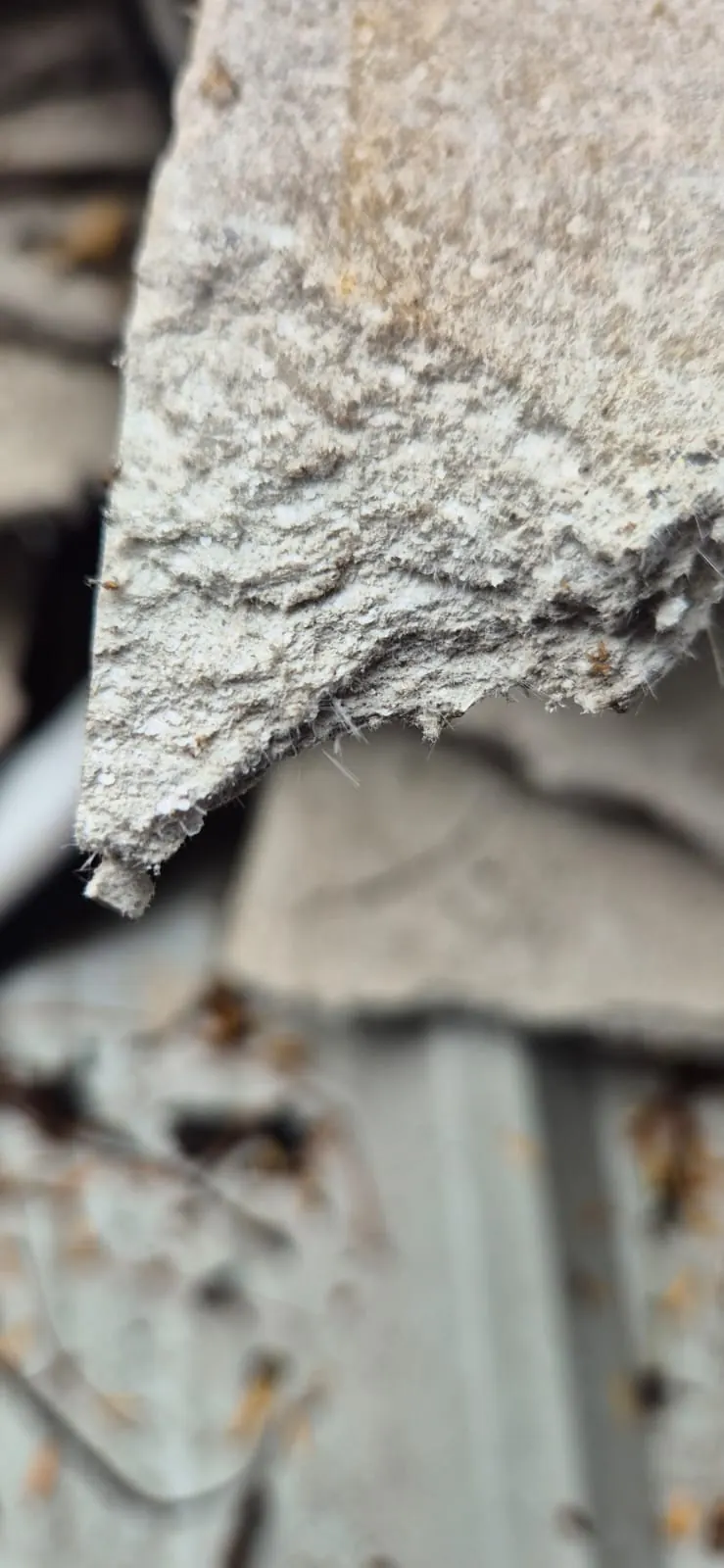
The material typically appears as off-white, pale grey, or cream-colored boards with smooth or textured surfaces. Board thickness commonly ranges from 3mm to 25mm depending on application. Unlike asbestos cement products (which feel heavy and stone-like), AIB feels relatively lightweight and may show fibrous texture along cut edges or broken surfaces—this fibrous appearance is a key identification characteristic.
Common AIB applications in buildings include ceiling tiles and panels, wall linings behind radiators or in fire-rated partitions, internal fire door cores, soffit panels beneath stairs, lift shaft linings, and fire protection boxing around structural steel beams and columns. Any grey or cream-colored board material in pre-1985 buildings should be treated as suspected AIB until confirmed otherwise through laboratory testing.
Why AIB Requires Licensed Removal
AIB falls under the licensed asbestos work category defined by Control of Asbestos Regulations 2012. This classification reflects the material's high fiber release potential—disturbing AIB through cutting, drilling, breaking, or removal operations generates significant airborne fiber concentrations posing serious health risks without proper controls.
Licensed asbestos work requires contractors to hold a valid HSE asbestos license obtained through rigorous application processes demonstrating technical competence, suitable equipment, robust procedures, and comprehensive insurance coverage. Only licensed contractors may legally undertake AIB removal work—unlicensed contractors or DIY removal attempts violate regulations and create serious prosecution risks alongside health hazards.
Licensed works require mandatory HSE notification at least 14 days before work commencement (except emergency situations). Notification provides regulatory oversight ensuring contractors implement appropriate controls. HSE inspectors may conduct site visits during licensed works to verify compliance with notification details and regulatory requirements.
The regulatory framework exists because chrysotile and amosite asbestos fibers cause severe lung diseases including asbestosis (progressive lung scarring), lung cancer, and mesothelioma (invariably fatal cancer of lung/abdomen linings). These diseases typically develop 15-60 years after exposure, with no safe threshold—even brief exposures create disease risks. Proper licensed removal controls minimize these risks to effectively zero through containment, suppression, and verification procedures.
Licensed Removal Methodology and Controls
Licensed AIB removal follows strict regulatory requirements detailed in HSE guidance documents HSG247 and HSG248. The process begins with comprehensive planning including detailed risk assessment, method statement development, and site-specific planning addressing access, services isolation, emergency procedures, and waste management logistics.
Physical preparation requires establishing a fully sealed enclosure isolating the work area from occupied spaces. Enclosures utilize heavy-duty polythene sheeting (minimum 1000 gauge/250 microns) creating complete floor-to-ceiling barriers. All penetrations, joints, and edges receive careful sealing using appropriate tapes and sealants. The enclosure incorporates a three-stage decontamination unit (DCU) providing controlled personnel entry/exit through dirty area, shower, and clean area chambers.
Before removal operations commence, we establish negative air pressure within the enclosure using HEPA-filtered air extraction units. These units continuously extract air from the enclosure, replacing it through controlled inlets, creating inward airflow preventing fiber migration beyond enclosure boundaries. We maintain negative pressure throughout all removal operations and subsequent clearance procedures.
AIB removal itself employs wet removal techniques minimizing fiber release. Operatives inject water into board matrices using hand-pump sprayers and allow thorough saturation before carefully prying boards from fixing positions using hand tools. Power tools are prohibited during removal due to extreme fiber generation risks. All removed materials undergo immediate double-wrapping in labeled polythene before removal from the enclosure through the DCU.
Throughout removal operations, we conduct continuous personal air monitoring using real-time fiber monitoring equipment and collect static air samples for laboratory analysis. All operatives wear full-face powered respirators providing positive pressure filtered air supplies maintaining protection even during peak fiber generation activities. Operatives also wear full disposable protective suits with integral boots, double-gloved hands, and head coverings.
Air Clearance Testing and Certification
Following complete AIB removal and initial cleaning, the work area undergoes thorough decontamination including HEPA vacuuming all surfaces (walls, floors, ceilings, remaining fixtures), damp wiping utilizing clean water and disposable cloths, followed by repeat HEPA vacuuming. We inspect all surfaces under high-powered lighting confirming no visible debris or contamination remains.
After decontamination completion, we conduct four-stage clearance testing performed by UKAS-accredited independent analysts. This testing protocol includes visual inspection confirming cleanliness, smoke testing verifying enclosure integrity, aggressive air disturbance using leaf blowers and brushes to dislodge any remaining fibers, and final air sampling during continued disturbance collecting samples for laboratory analysis.
Laboratory analysis quantifies airborne fiber concentrations in collected samples. The clearance threshold for licensed removal projects is 0.01 fibers per milliliter of air (0.01 f/ml)—this represents the background fiber concentration in normal UK outdoor air. Areas must achieve fiber levels below this threshold to receive clearance certification.
Upon successful clearance (fiber levels below 0.01 f/ml), the independent analyst issues a clearance certificate confirming the area safe for unrestricted access and normal use. Only after receiving this certificate do we dismantle the enclosure and return the area to the client. Failed clearance tests require repeat decontamination and retesting until successful clearance achievement—we continue this cycle until clearance standards are met.
Project Planning and Cost Considerations
Licensed AIB removal projects require careful advance planning integrating with broader building works programs. The mandatory 14-day HSE notification period means immediate-start works are impossible except emergency situations (structural collapse, fire damage, immediate safety risks). Clients must incorporate this notification period into project timelines.
Typical project durations vary substantially based on AIB quantity, location complexity, and building occupancy status. Small projects (single room, ceiling tile removal, 20-30m² coverage) typically require 3-5 working days including enclosure construction, removal, decontamination, and clearance testing. Large projects (multi-room, extensive wall linings, 100-200m²+) may require 2-3 weeks for complete execution.
Licensed removal costs reflect the extensive regulatory requirements, specialist equipment, trained personnel, independent testing, and comprehensive insurance coverage mandatory for this work. Typical pricing ranges from £80-150 per square meter for straightforward ceiling tile removal to £200-300+ per square meter for complex situations involving difficult access, occupied buildings requiring out-of-hours work, or structurally integrated panels requiring careful extraction.
Additional cost factors include independent air testing fees (£800-1,500 per project), enclosure construction materials, waste disposal charges (AIB waste is expensive to dispose—approximately £400-600 per tonne), and potential costs for services isolation, temporary heating/lighting, or security provisions during project execution.
Why Professional Licensed Removal is Essential
The consequences of unlicensed AIB removal attempts include serious health risks to building occupants and workers, potential HSE prosecution carrying unlimited fines and imprisonment for duty-holders and contractors, contamination of surrounding areas potentially rendering properties uninhabitable until professional decontamination, and massive financial costs for emergency remediation often exceeding £50,000-100,000+ for whole-property decontamination.
We regularly encounter buildings contaminated by unlicensed removal attempts—common scenarios include maintenance contractors removing "just a few ceiling tiles" without realizing AIB status, building owners attempting DIY removal to save costs, or unlicensed asbestos contractors undertaking work beyond their competence scope. These incidents invariably result in severe contamination requiring extensive remediation far exceeding the original licensed removal costs.
Professional licensed removal provides complete regulatory compliance, comprehensive health protection for all parties, proper containment preventing contamination spread, certified air clearance confirming safety, full insurance coverage protecting all parties, and complete documentation supporting building records and future sale/lease requirements.
If you suspect AIB presence in your building, the correct approach involves professional identification through UKAS-accredited sampling and testing, obtaining quotations from licensed asbestos contractors, ensuring contractors provide HSE license copies and insurance certificates, verifying notification submission to HSE, and requiring provision of independent clearance certificates upon project completion.